
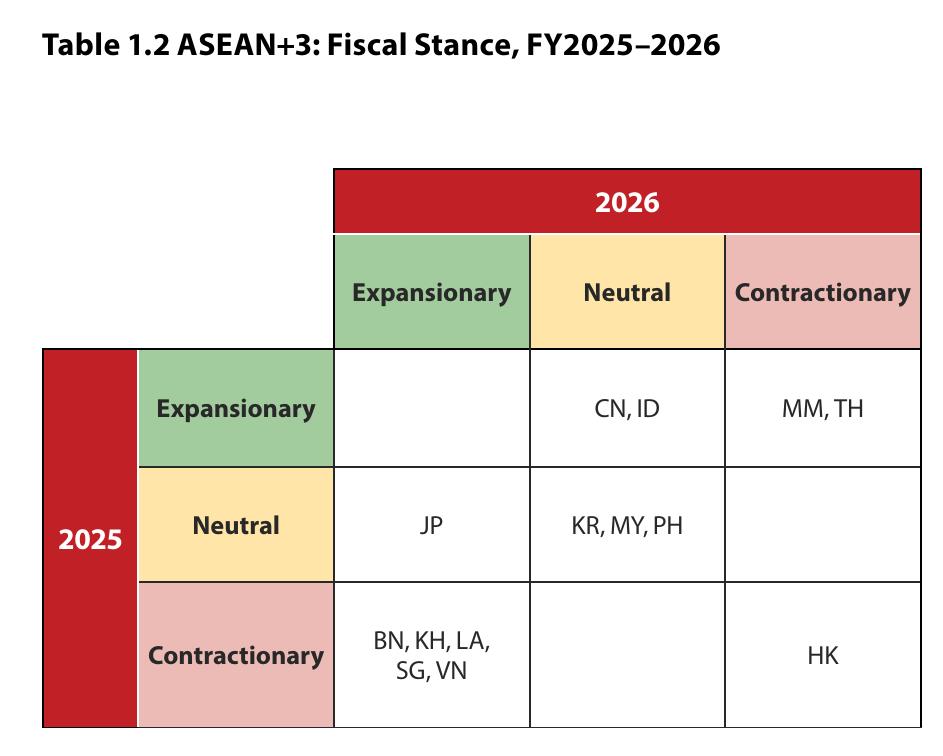
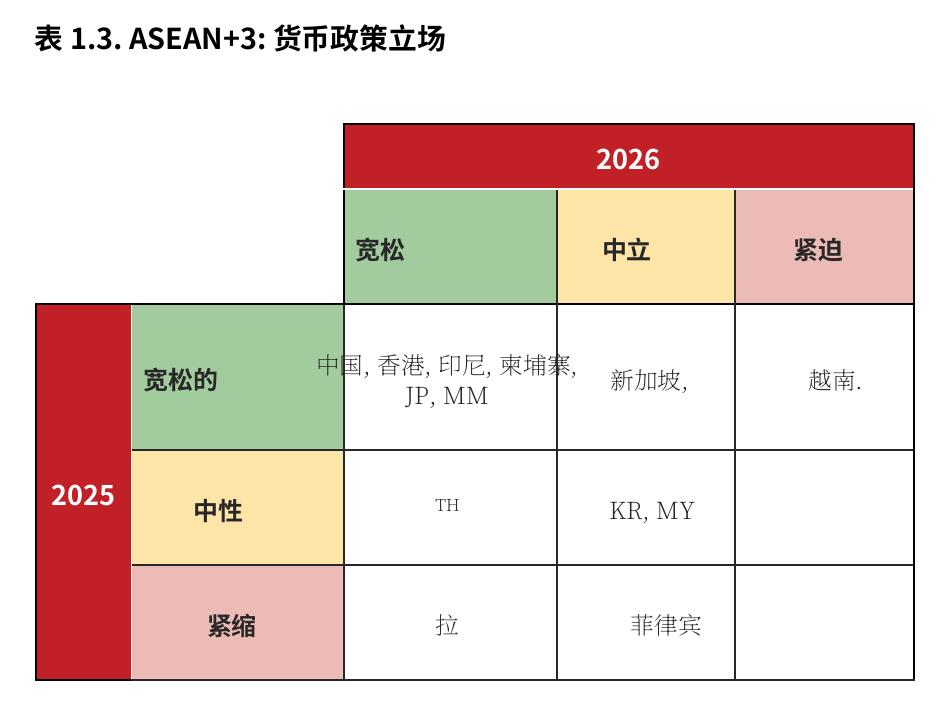
Chapter 1. Macroeconomic Prospects and Challenges remain elevated for a sustained period, temporary and is significant. Maintaining the flexibility to provide such support, while preserving the broader direction of consolidation, remains an important consideration (see ASEAN+3 Fiscal Policy Report 2026 for further discussion). Source: National authorities via CEIC and Haver Analytics; AMRO staff estimates. FY2024hilgatintbtfepdiurliesthxnditrei5 was higher than the expenditure in FY2024. the year, holding its policy rate steady after initial cuts, headwinds intensifed. With price pressures subsiding from post-pandemic peaks, central banks across the growth amid a challenging external environment. Several demand prompted a pause in its easing cycle. central banks, including those in Indonesia, Malaysia, the Philippines, and Thailand, lowered policy rate to bolster Looking ahead, the monetary policy environment remains complex, with the combination of external headwinds, trade-related headwinds. In China, the central bank geopolitical uncertainty, and the potential for supply- central banks face. The rate cuts implemented in 2025 the year, utilizing a range of policy tools including interest headwinds, and most central banks across the region retain room to respond further should conditions warrant. This easing trend was not universal, however. The Bank However, the near-term outlook involves weaker external of Japan moved in the opposite direction, raising its inflation - a combination that, should it materialize, of ultra-loose monetary policy, with inflation showing signs of sustainably reaching its target. The Bank of Korea inflationary pressure. A supply-driven price shock that 3/Contribution tothe change in fscal balance is calculated, based on the following decomposition: and fb=fiscal balance as a percentage of GDP, R=revenue, E=expenditure, P=GDP deflator, Y=real GDP, g=real GDP growth, π=GDP deflator inflatior
 研搜
研搜



 0731-84720580
 商务合作:really158d

 友链申请 (QQ):1737380874


 下载Excel
 下载图片
下载图片
 原图定位
原图定位


 打包全文图表
 收藏
收藏
 2026-07-08
 原图定位
原图定位

![满足AI推理需求所需的计算资源规模(以吉瓦计)[9]](https://file.sgpjbg.com/FileUpload1/News/2a923cfb-8dea-43d4-9114-4097f1972f49.png "满足AI推理需求所需的计算资源规模(以吉瓦计)[9]")


 微信扫码登录


 手机快捷登录

 账号登录
账号登录

